carlossalaff
Mar 4, 2026 • 2 minutes read
NASA HeroX Awards LEO Flight for Visionary Aerial Mobility Ecosystem
How will we navigate the skies of 2035? This was the question posed by the NASA HeroX "Sky for All" Challenge, which invited innovators to map the technological, regulatory, and social trends shaping the future of aviation.
We are thrilled to announce that LEO Flight was recognized by NASA for our comprehensive vision of a distributed aerial mobility ecosystem. This award validates our mission: creating a world where personal flight is not just a dream, but a safe, accessible reality.
Building the Infrastructure for Personal eVTOLs
At LEO Flight, we believe that a "flying car" is only as useful as the network it operates within. Our award-winning submission focused on the integration of our flagship aircraft, the LEO Coupe, with a scalable infrastructure of VERTISTOP hubs.
The VERTISTOP Vision for Human FLying
Unlike traditional airports or large-scale vertiports, VERTISTOP hubs are designed to be:
Hyper-Local: Small-footprint landing zones that integrate into existing urban architecture.
Automated: Featuring smart-charging and autonomous docking systems.
Scalable: Enabling a "point-to-point" network that bypasses ground traffic entirely.
Why NASA’s Recognition Matters
NASA’s Tournament Lab sought concepts that handle dense, diverse, and autonomous traffic. By awarding LEO Flight, NASA has acknowledged that our clustered electric jet technology and ecosystem approach are key to a safe and efficient 2035 airspace.
This recognition fuels our current production sprint as we prepare for the 2026 LEO JetBike launch and continue the development of the human flying LEO Coupe.
Explore the Future of Flight
View the Award Details: Read the full challenge results on the official HeroX NASA Sky for All page.
Technical Deep Dive: Learn how our Propulsion Technology makes compact urban landing possible.
Join the Network: Join our Newsletter to hear more about our technical development.
From DARPA Innovation to the 2026 JetBike: The Evolution of LEO Flight
View More
The Real-World Flying Machine for Humans: A 2026 Reality
View More
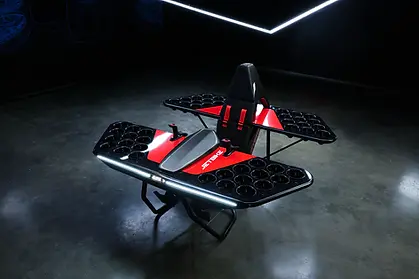
LEO JetBike | The World’s First Electric Air Bike
View More
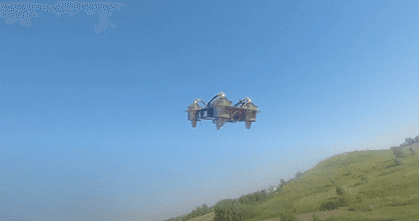
Leading the Future of Aviation: LEO Flight at EAA AirVenture Oshkosh 2022
View More